
VICTOR ATTAH: THE FRUITS OF VISIONARY LEADERSHIP AND A LEGACY THAT REFUSES TO FADE
From Pat Utomi’s reflection on immortality to an outpouring of tributes by prominent Akwa Ibom indigenes, the former governor’s years in office have reopened a conversation about vision, institutional development, human capital, resource control and the foundations of modern Akwa Ibom State.
By Thomas Thomas
Sometimes, it takes a journey through a landscape transformed by an earlier generation to appreciate the enduring consequences of leadership. Sometimes, a passing observation by one individual opens a window through which an entire community revisits its history. And sometimes, the most compelling tribute to a leader is not delivered at a funeral or during a ceremonial birthday celebration, but emerges spontaneously from the recollections of people who experienced his administration and continue to live with the consequences of its decisions.
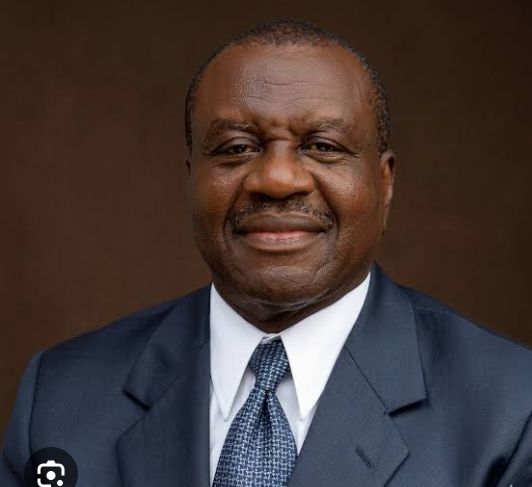
Such a moment unfolded on social media when Professor Pat Utomi reflected on the legacy of Obong Victor Attah, former governor of Akwa Ibom State, following a journey from Ikot Ekpene to the Victor Attah International Airport. His reflection, subsequently reproduced on the Facebook page of veteran journalist Mr Anietie Usen, drew a remarkable stream of responses from prominent Akwa Ibom indigenes, professionals, academics, retired public servants and journalists. Their comments transformed an individual observation into a wider conversation about the place of Victor Attah in the political, economic and developmental history of Akwa Ibom State.
Utomi’s intervention was particularly striking because it connected the visible landscape of contemporary Akwa Ibom to the vision and decisions of a former governor whose administration laid foundations that, in the assessment of the contributors, continue to influence the state. It was a reflection not merely on roads, buildings, an airport or other physical assets, but on the capacity of a leader to imagine a future beyond the immediate circumstances of his time.
Writing about his experience, Utomi declared: “This morning, I have already had a taste of immortality.” He explained that his journey had reminded him of “the foundation that one decent, visionary man of character, Obong Victor Attah, laid as Governor of Akwa Ibom State, and the fruits of his labour, so evident even in the work of his successors, both good and bad.”
The significance of that observation lies in its emphasis on continuity. Governments come and go, political circumstances change, and successive administrations introduce their own priorities. Yet the foundations established by an earlier government may continue to shape the possibilities available to those who follow. The airport, roads, public institutions, investment decisions and human-capital initiatives associated with Attah’s administration have consequently become part of a larger discussion about how leadership decisions can outlive the political tenure in which they were made.
Utomi went further, describing the experience as one in which “a sense of what transformational leadership truly means took hold of me.”
He then offered a reflection on the character of leaders whose ambitions are directed towards a future they may not live to see fully realised. “These are the people who see tomorrow and persevere to bring it about, even in the face of determined opposition,” he wrote.
His conclusion was unequivocal: “Attah has attained immortality, like Chief Awolowo, Dr Michael Okpara, and Sir Ahmadu Bello, even as he continues to live so simply.”
The comparison with these prominent Nigerian statesmen was Utomi’s assessment of the enduring character of Attah’s legacy. It immediately invited a question that has followed the former governor’s career for years: what exactly did his administration establish that continues to command such attention?
The responses on Usen’s Facebook page offered several answers, ranging from infrastructure and economic investments to civil-service reform, educational advancement, resource control and the personal qualities of the man himself.
THE GOVERNOR WHO SET THE TONE
Among the contributors was Etokowo Owoh, who described Attah as the leader who established the direction of Akwa Ibom’s development.
“Yes, he set the tone for Akwa Ibom development and took the challenge to ensure the manifestation of his laudable plans,” Owoh wrote.
While acknowledging the physical infrastructure that has become a familiar part of discussions about the former governor, Owoh insisted that Attah’s achievements could not be adequately assessed without considering the people and institutions his administration sought to develop.
“While many would chronicle the array of physical infrastructure he brought to bear in our land, I cannot but add that he did significantly well in human capital development,” he stated.
This distinction is important. Infrastructure provides the physical environment within which a society operates, but the quality of public administration, the competence of its workforce and the knowledge available to its citizens help determine whether those assets can be translated into lasting social and economic benefits.
Owoh argued that Attah substantially changed the intellectual character of the state civil service. According to him, the former governor “spared no effort in training civil servants” and funded workshops across government ministries. He also sent senior civil servants abroad for courses in contemporary management issues, with the intention of strengthening institutional capacity and improving work ethics.
These observations place professional development at the centre of the Attah story. They suggest an administration that, in the recollection of one of its admirers, understood that public-sector performance depended not simply on the number of government projects commissioned but also on the capabilities of the people responsible for running the machinery of government.
Owoh also highlighted Attah’s attention to technology and telecommunications. He recalled the establishment of the Ministry of Science and Technology and the initiative to develop a Science Park as part of the state’s technological ambitions.
“He brought IT into the state and established the Ministry of Science and Technology which laid the foundation for Technology development in the state,” Owoh wrote.
He further recalled Attah’s efforts to secure an early entry for GSM operators into Akwa Ibom and his investment in Econet, the telecommunications company that subsequently became part of the business lineage associated with Airtel.
“He bought shares in ECONET, now Artel,” Owoh wrote, adding that the investment later paid off handsomely.
The account presents an important dimension of Attah’s economic thinking as remembered by the contributor: the possibility of using government resources not only for immediate expenditure but also for investments capable of producing future returns. The precise financial details of the investment would require independent documentation, but Owoh’s recollection captures the place that commercial investment occupies in the public narrative surrounding the former governor.
For Owoh, however, the administration’s legacy was not exhausted by technology, training or investment. He also remembered the governor’s willingness to engage directly with the public.
“Above all, Obong Victor Attah made himself available to the public,” he wrote.
Owoh recalled quarterly media briefings and live radio appearances during which citizens could ask the governor questions directly.
“He wore compassion as a medal on his neck,” Owoh concluded. “A really, really good man.”
The language is deeply personal, but the underlying point concerns public accountability. A leader’s relationship with citizens is shaped not only by the policies introduced under his administration but also by the avenues available for questioning, engagement and explanation. In Owoh’s recollection, Attah’s direct media engagements formed part of that relationship.
A LANDSCAPE THAT TELLS A STORY
Dr Udeme Nnanna, another contributor, responded with an extensive inventory of projects and initiatives he associated with Attah’s years in office. His comment was among the most detailed interventions on the page, spanning aviation, hospitality, roads, power, education, housing, public buildings, scholarships, urban development and the struggle for increased oil derivation revenue.
“Only intelligent people know that Governor Victor Attah was and is still in a class of his own,” Nnanna began, before asserting that the former governor “created things that didn’t exist in Akwa Ibom State.”
At the centre of his recollection was the airport now bearing Attah’s name. Nnanna also listed Shelter Afrique Estate, the Ibom Power plant, Ibom Resort Hotel, an 18-hole golf course, Uyo Village Road, major general hospitals and secondary schools, including Aka Community Secondary School.
He recalled the dualisation of the Ikot Ekpene, Abak, Oron and Nwaniba roads, the remodelling of Ibom Plaza, the construction of the Nnung Udoe–Ikot Okwot Road, the Mbiabong Ikot Udofia–Itu Mbonuso Road and the Uruan–Nsit Atai–Okobo Road.
He also identified Edet Akpan Avenue’s traffic lights, the remodelling of the State Secretariat, electricity and water projects, school renovations and the establishment of Akwa Ibom State University among the developments he attributed to the administration.
The sheer range of projects in Nnanna’s comment reflects how infrastructure has become central to the collective memory of the Attah years. The significance of such recollections, however, goes beyond the enumeration of projects. They point to the way citizens often measure government by the visible transformation of their immediate surroundings and by the institutions that become available to subsequent generations.
Nnanna also recalled the construction of housing estates across the state’s local government areas, the banking layout, the Stock Exchange building, APICO House, the governor’s lodge and the Akwa Ibom House in Abuja. He added motor parks, an abattoir, a cenotaph and the Ibibio Merchants of Light Museum to the list.
These projects, considered together, illustrate the broad developmental ambitions that supporters associate with Attah’s administration: the expansion of public infrastructure, the creation of facilities for commercial activity, the improvement of urban spaces and the provision of institutions intended to serve social and cultural purposes.
Yet Nnanna’s tribute did not stop at concrete structures.
He recalled the former governor’s educational interventions, including scholarships for more than 200 Akwa Ibom graduates to study abroad. According to Nnanna, many of those beneficiaries subsequently settled abroad and helped establish vibrant Akwa Ibom communities in the diaspora.
That recollection brings the conversation back to human capital development. Scholarships can create opportunities for individual advancement, but their wider significance lies in the knowledge, professional experience and international networks that beneficiaries may acquire. Whether and how those benefits subsequently flow back to the state is a separate question, but the scholarship programme remains an important part of Nnanna’s account of Attah’s priorities.
He also attributed the introduction of free education and the payment of examination fees for Senior School Certificate Examination and National Examinations Council candidates to Attah’s administration.
The educational dimension of the tribute is particularly significant in a state where families have historically regarded schooling as an important pathway to professional mobility and social advancement. Policies that reduce the immediate financial burden of education can have consequences extending well beyond the years in which they are introduced.
Nnanna further recalled Attah’s role in bringing younger professionals and academics into government. Among those he mentioned were Prince Chris AbasiEyo and Professor Chris Ekong, now Vice-Chancellor of the University of Uyo, as well as Nnanna himself.
In this account, leadership was not simply about constructing facilities or implementing policies. It also involved identifying individuals, creating opportunities for participation and allowing new generations to acquire experience in public administration.
Nnanna’s comment was equally emphatic on the question of political representation and social inclusion. He maintained that Attah was not tribalistic and gave opportunities to qualified indigenes from different parts of the state. He also remembered the period as one of relative peace.
“Attah, as Governor, really helped oooooooh!” he exclaimed, before acknowledging the impossibility of recounting every initiative associated with the administration.
The comment culminated in an announcement of an annual gathering to celebrate the former governor. “On November 20, we will gather again, as some of us usually do, to celebrate a visionary leader who stood firmly to defend the interests of Akwa Ibom State and its people,” Nnanna wrote.
The planned gathering, as described by the contributor, reflects a desire among some admirers to preserve the memory of Attah’s leadership through regular acts of commemoration.
FROM AKWA IBOM TO SINGAPORE AND DUBAI
Journalist Ita Benedict introduced an international dimension to the discussion by comparing Attah’s leadership philosophy with development narratives associated with Singapore and Dubai.
Responding to Nnanna, Benedict wrote that Attah “fits perfectly into the Singaporean leadership development story as led by Lee Kuan Yew” and referenced the book From Third World to First, alongside My Vision: Challenges in the Race to Excellence, associated with Sheikh Mohammed bin Rashid Al Maktoum, the ruler of Dubai.
Benedict’s comparison was not merely about physical development. It was an attempt to situate Attah within a broader conversation about leaders who seek to transform the economic and institutional circumstances of their societies through long-term planning, administrative reform and a willingness to pursue ambitious objectives.
He summarised the qualities for which he believed the former governor would be remembered as “courage, vision, humility, simplicity, decency and excellence.”
The references to Singapore and Dubai invite a comparative question: how should the performance of a subnational government be assessed when its leader seeks to create the foundations for long-term development? Such a comparison requires attention to differences in political institutions, economic structures, public finances, population, international circumstances and the powers available to different levels of government. Nevertheless, Benedict’s observation illustrates how Attah’s admirers interpret his administration through the wider language of developmental leadership.
More revealing still were two anecdotes Benedict shared about Attah’s working relationship with his subordinates.
According to Benedict, a commissioner who served in Attah’s government told him that the governor telephoned him after a particularly exhausting day in the office.
The governor’s reported question was simple: “If you are not as tired as I am, could you please come to the lodge…?”
The anecdote portrays a leader whose working day, at least in the recollection passed on to Benedict, extended beyond conventional office hours. It suggests a demanding administrative culture in which the business of government continued after the formal day’s activities.
But it was Benedict’s second anecdote that offered a more direct insight into the former governor’s approach to disagreement and advice.
A celebrated media adviser who served under Attah reportedly told Benedict that he had once disagreed with a decision taken by the governor and submitted a memorandum expressing his displeasure.
Rather than dismissing the criticism, Attah reportedly acknowledged receiving the memorandum and promised a response.
According to the account, the governor later wrote back, asking why the adviser should wait for him to make a mistake before offering advice.
Benedict reproduced the essence of the exchange in these words: “Obong Attah took a decision which I felt was not right and I wrote a memo to him expressing my displeasure. When he saw me afterwards, he told me in his usual leadership simplicity that he has seen my memo and that I should expect his response. True to his words, he took time and penned me a response, querying why I should only wait for him to make a mistake before I advise him.”
If accurately recalled, the exchange captures an important principle of administrative leadership: advice should not be reduced to a reaction to mistakes. It should be part of the process through which decisions are formulated, tested and improved.
It also suggests that a memorandum expressing disagreement could become an opportunity for engagement rather than an automatic act of disloyalty.
Benedict concluded his intervention with a sweeping assessment: “There are many insights known to me about Obong Attah’s leadership mindset. He remains to date Akwa Ibom’s greatest mind.”
That final statement is Benedict’s personal judgment. Its significance in the discussion lies less in establishing a definitive ranking of the state’s leaders than in revealing the depth of admiration that Attah continues to command among some of those who remember his administration.
CIVIL-SERVICE RECRUITMENT AND THE HUMAN FACE OF GOVERNANCE
Nene Affia’s contribution brought another dimension to the discussion: the importance of fairness in public-sector recruitment and representation.
Responding to Nnanna’s account of Attah’s record, Affia recalled an experience involving recruitment into the civil service and the representation of the state’s 31 local government areas.
“How about respecting local character in civil service recruitment, we can’t forget this,” Affia wrote.
She explained that the group had consisted of 31 people, representing the 31 local government areas, and that when four individuals left for other opportunities, the vacant positions were readvertised to accommodate the local government areas concerned.
“We were 31, representing the 31 LGAs, then 4 of us left for greener pastures. Those 4 slots were re-advertised to accommodate those LGAs. That’s something I cannot forget,” she added.
Affia’s recollection underscores the importance of recruitment practices in the way citizens evaluate public administration. For many people, the fairness of government is experienced not through major infrastructure projects but through decisions affecting access to employment, professional development and representation.
A recruitment policy that takes geographical representation into account may be remembered as an effort to distribute opportunities across a diverse state. Its broader implications, however, must be considered alongside transparent selection procedures, competence, merit and the applicable rules governing public employment.
The fact that Affia chose to recall this particular experience is itself revealing. It suggests that the legacy of an administration is carried not only by monuments and official records but also by personal memories of opportunities received and administrative practices encountered.
THE TESTIMONY OF A RETIRED PERMANENT SECRETARY
Dr Nestor Udoh, a retired permanent secretary, offered another perspective on Attah’s public-service record. His intervention was especially noteworthy because he identified himself as a direct beneficiary of an initiative he wanted included in the account of the former governor’s achievements.
“Excellent. Gov. Attah has his place in the history of Akwa Ibom State,” Udoh wrote.
He then drew attention to the restoration of in-service training for civil servants, explaining that it had enabled him to undertake a specialist course.
“You didn’t mention that he restored in-service training for civil servants in Akwa Ibom state. I am a direct beneficiary of that because it enabled me to go for my specialist course,” he stated.
Udoh’s testimony reinforces Owoh’s earlier emphasis on human-capital development. It also illustrates how policies relating to staff training can influence individual careers and, potentially, the capacity of public institutions.
Civil servants occupy a critical position between government policy and the delivery of public services. Their professional knowledge, technical competence and ability to adapt to changing administrative demands can influence how effectively programmes are implemented. Opportunities for specialist training may therefore benefit not only individual employees but also the institutions in which they serve.
Udoh’s account is a personal testimony rather than a comprehensive assessment of the civil-service training system during Attah’s tenure. Nevertheless, it contributes a specific example to the broader claim that the administration invested in professional development.
He also raised a question about the preservation of the former governor’s legacy through writing and documentation.
“I don’t know if anyone has captured his many achievements in a book as I have done for Akpabio in my book Leadership Secrets of Godswill Akpabio,” he wrote.
Udoh then proposed that Nnanna might be well positioned to undertake such a project because of his direct experience of working with Attah.
“Udeme, if this has not been done, I think you’re the most qualified person to do it because you worked directly with him. Besides, you are an intellectual and a writer,” he added.
He concluded: “God bless governor Attah.”
Udoh’s suggestion raises a question that deserves attention beyond the immediate exchange on social media: how systematically has the history of Attah’s administration been documented, and how accessible are the relevant records to scholars, journalists, students and the public?
A comprehensive history would need to move beyond praise and recollection. It would require archival research, interviews with former officials and civil servants, examination of budgets and policy documents, project records, contemporary newspaper reports and independent assessments of the administration’s outcomes.
Such an undertaking would not diminish the value of personal testimony. Rather, it would preserve those memories while placing them within a more comprehensive historical framework.
A HERO TO THE PRESS
A former chairman of the Nigeria Union of Journalists in Akwa Ibom State, Mr. Ikpong Essien-Udom, also joined the conversation, describing the former governor in deeply personal terms.
“Obong Attah remains my hero and role model,” the former NUJ chairman wrote.
The contributor then posed a question that has become central to the counterfactual dimensions of political history: “In my quiet moments, I usually wonder how Akwa Ibom would have been today if HE VA had not come on the scene yesterday.”
The question cannot be answered conclusively. History does not permit certainty about what would have happened in the absence of a particular leader, because societies are shaped by multiple forces, including economic circumstances, public institutions, social movements, the actions of successive administrations and decisions taken by individuals at different levels of government.
Nevertheless, the question reveals the extent to which the former governor’s admirers associate his tenure with a particular phase in the state’s development.
The former NUJ chairman ended with a prayer: “May God continue to bless him.”
The choice of words is significant. By describing Attah as both a hero and a role model, the contributor moved beyond an evaluation of government programmes to an expression of personal identification with the values he believes the former governor represents.
THE INVESTMENT GOVERNOR AND THE POLITICS OF RESOURCE CONTROL
Otto Ikpe added another voice to the discussion, describing Attah as a pace-setter who laid the foundation for the state’s development.
“His Excellency Obong Victor Attah is the pace setter and laid a good foundation of development for Akwa Ibom State that is making it a destination in the Country,” Ikpe wrote.
He then gave the former governor a distinctive title: “I call him the investment Governor of our time.”
The description was linked to Ikpe’s recollection of the use of state resources for investment and infrastructure development. He argued that Attah was able to turn the state’s limited finances into greater opportunities by investing in Econet and using the proceeds of investment to support projects, including the airport.
Ikpe also cited the Ibom Power plant, roads and other infrastructure, alongside initiatives aimed at human empowerment and development.
The investment theme is particularly relevant to discussions of public finance in resource-producing states. Governments must decide how much of their revenue to devote to immediate public expenditure, how much to commit to infrastructure, and whether and how to invest in ventures that may generate future returns. These decisions involve risks, competing priorities and questions of accountability, but they can have long-term implications for a state’s development trajectory.
Ikpe’s tribute also highlighted Attah’s role in advocating resource control, true federalism and increased derivation revenue for oil-producing states.
“Above all he fought strongly for resource control, true federalism and derivation which has given oil producing states so much money they are spending today,” he wrote.
This aspect of Attah’s legacy reaches beyond Akwa Ibom’s internal development. It connects the former governor to the wider constitutional and fiscal debate over the relationship between the federal government and Nigeria’s oil-producing states.
The derivation principle is part of Nigeria’s revenue-allocation framework, and its implementation has been a major concern for oil-producing communities and state governments in the Niger Delta. The 13 per cent derivation arrangement became a particularly significant component of the fiscal relationship between oil-producing states and the federation.
Attah’s admirers regard his advocacy as an important part of the struggle to secure a greater share of oil revenue for the states from which the resources are extracted. A full historical assessment would examine his contribution alongside those of other governors, political actors, community organisations and constitutional developments that shaped the eventual arrangements.
For Ikpe, however, the connection between resource advocacy and development was direct: increased revenue created opportunities for governments to finance projects, expand infrastructure and pursue broader public objectives.
BEYOND THE FACEBOOK TRIBUTES
Taken together, the comments on Anietie Usen’s Facebook page present a portrait of Obong Victor Attah as remembered by people who associate his administration with a combination of physical development, institutional investment, educational opportunity, public-service reform and advocacy for the economic interests of Akwa Ibom State.
Utomi’s reflection supplied the central idea: that a leader’s influence can endure beyond the years spent in office. Owoh emphasised the development of human capacity, technology and public engagement. Nnanna recalled a broad array of infrastructure and educational initiatives. Benedict highlighted leadership discipline, humility and openness to advice. Affia remembered recruitment practices and geographical representation. Udoh spoke from personal experience of civil-service training, while the former NUJ chairman expressed the emotional bond that can develop between a public figure and those who regard his leadership as consequential. Ikpe brought the discussion back to investment, resource control and the pursuit of fiscal justice.
These are not identical perspectives, and they do not constitute a comprehensive or independently verified audit of Attah’s administration. They are, however, valuable testimony to the ways in which his years in office continue to be interpreted by a cross-section of Akwa Ibom’s public voices.
There is also a distinction between remembering a leader and writing a complete history of his government. Tributes naturally foreground achievements and personal experiences that inspire admiration. A rigorous historical assessment must also investigate the administration’s limitations, contested decisions, unmet expectations, the costs of its projects and the contributions of other actors. It must establish what was initiated, what was completed, what endured and what subsequent administrations changed.
Such scrutiny is not the enemy of legacy. It is what allows legacy to be understood rather than merely celebrated.
The value of the exchange initiated by Utomi and amplified on Usen’s Facebook page lies in the questions it has reopened. What does visionary leadership mean in practical terms? How should the public evaluate the balance between infrastructure and human-capital development? What systems should be established to preserve the knowledge of experienced public servants? How can a state ensure that major projects produce sustainable benefits? And how should future generations distinguish between the political memory of a leader and the documented historical record of his administration?
These questions are especially important because development is rarely the work of one individual alone. Leaders operate within institutions, inherit circumstances created by their predecessors and depend on the contributions of civil servants, professionals, communities and other public officials. Yet individuals can still make consequential decisions about priorities, investments and the institutions they seek to establish.
It is this intersection between personal leadership and institutional continuity that gives Utomi’s reflection its enduring force.
When he travelled from Ikot Ekpene towards an airport bearing the former governor’s name, he saw more than a transport facility. He saw a reminder of a vision that, in his judgment, had become embedded in the state’s development. The contributors who followed him supplied their own memories of that vision: a civil servant’s opportunity for specialist training, a recruit’s recollection of geographical representation, an adviser’s account of written disagreement, a journalist’s admiration for a leader’s working habits, and an observer’s inventory of roads, schools, power infrastructure and public buildings.
Each recollection offers a different entry point into the history of the Attah years.
The challenge now is to preserve those memories, test them against documentary evidence and situate them within the wider history of Akwa Ibom and Nigeria. A state that fails to document its own development risks leaving future generations with fragments of recollection, partisan interpretations and incomplete accounts of the decisions that shaped its present circumstances.
A carefully researched history of Attah’s administration would serve not only the former governor or his admirers but also students, researchers, policymakers and citizens interested in understanding how Akwa Ibom evolved. It would provide an opportunity to assess achievements without exaggeration, examine controversies without prejudice and identify lessons that remain relevant to contemporary governance.
Ultimately, the strongest legacy is not one that is insulated from questions. It is one whose achievements, shortcomings and historical significance can withstand careful examination.
Utomi’s description of Attah as a man who “see[s] tomorrow and persevere[s] to bring it about” captures the central argument advanced by his admirers. Their testimonies suggest that they regard the former governor’s significance as extending beyond his tenure because they associate his administration with projects, policies and institutional decisions whose consequences they believe remain visible.
Whether expressed through the language of immortality, the memory of a scholarship, the recollection of professional training or the sight of an airport, the underlying theme is the same: leadership is ultimately judged not only by what happens while a leader occupies office, but also by what remains, what continues to function and what later generations are able to build upon.
For Obong Victor Attah, that continuing conversation has become part of his public legacy.
And for Akwa Ibom State, the tributes offer an invitation to do something more enduring than praise a former governor: to document its history, interrogate its development experience and ensure that the lessons of its past remain available to those responsible for shaping its future.