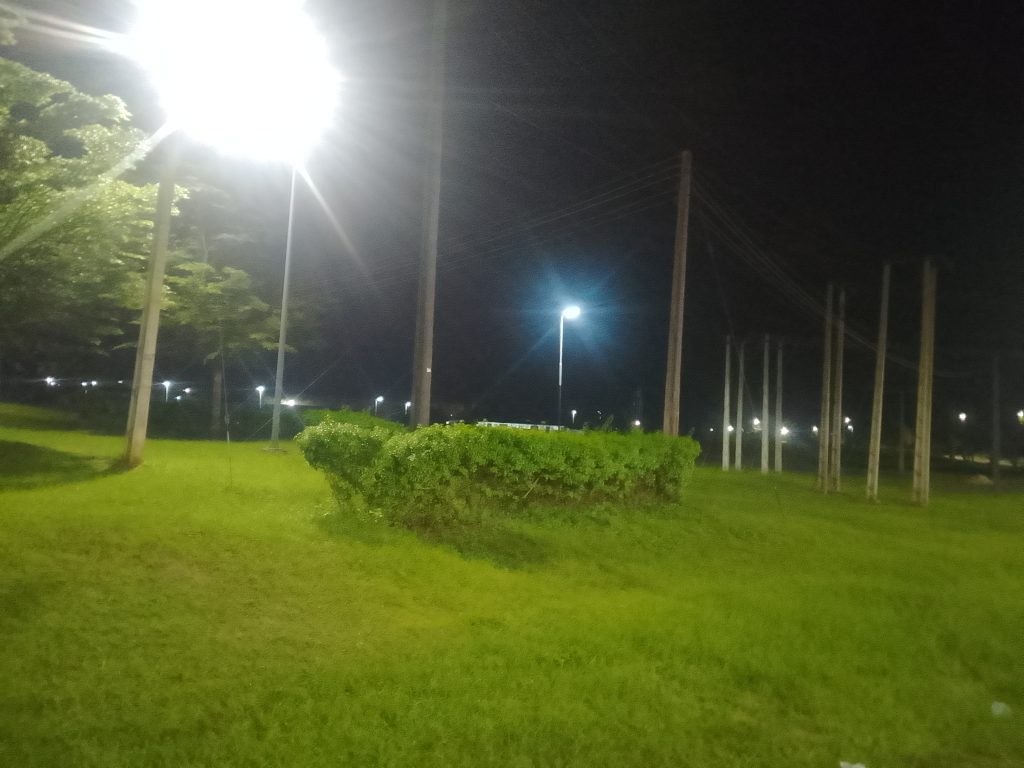
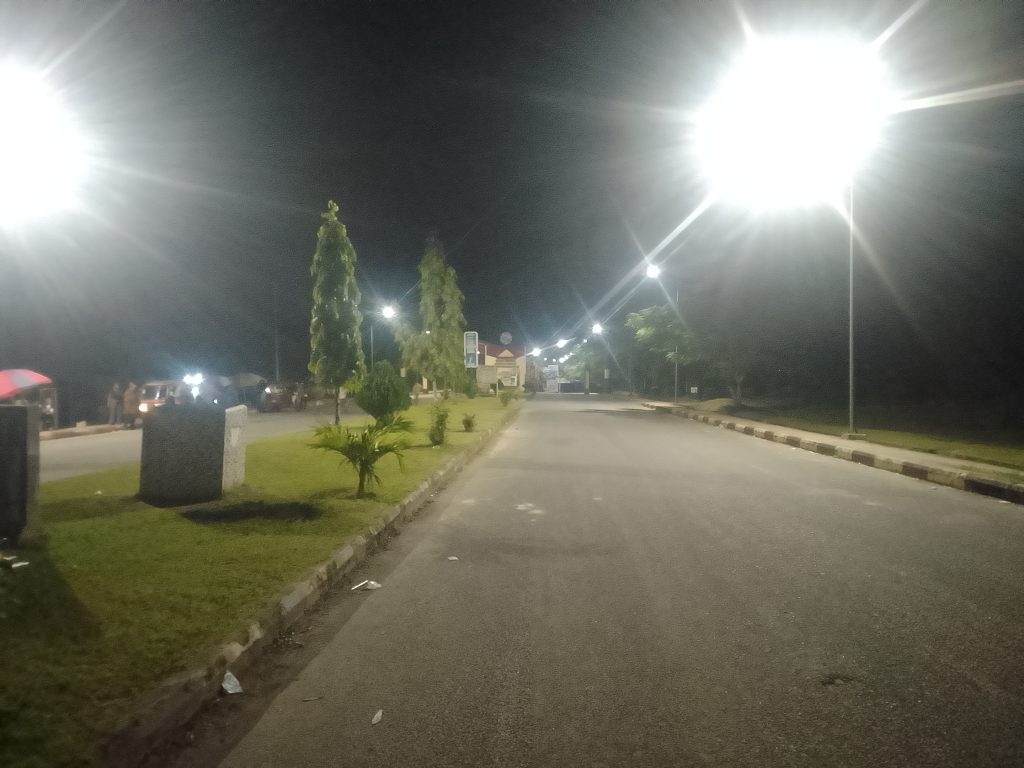
UNIUYO BEAUTIFUL AT NIGHT AS IN THE DAY
Thomas Thomas
It was 7:00 p.m. on a seemingly ordinary evening. Boredom had set in, and I felt the need to step out for some fresh air and a change of environment. I therefore decided to take an evening walk around the Main Campus of the University of Uyo with my young friend and fellow scholar, Ukobong Effiok. What began as a casual stroll soon became an unexpected encounter with beauty, orderliness and the remarkable atmosphere of a university campus coming alive after sunset.

As we walked through the campus, I could hardly conceal my admiration for the environment before us. The illumination, the relative serenity, the neatness of the surroundings and the general appearance of the university presented a picture that was both refreshing and inspiring. Suddenly, I began to see the University of Uyo in a different light, quite literally. The campus looked so beautiful that I could not help comparing its nighttime appearance with the sparkling beauty of London after dark, while some aspects of its environment evoked the organised grandeur of Washington, DC, in the afternoon.
What struck me most, however, was not merely the beauty of the campus at night but the visible attention being given to cleanliness, maintenance and order. The environment appeared to reflect a renewed consciousness of the importance of keeping a university community attractive, healthy and conducive to learning. The cleaners were at their duty posts, while the general atmosphere suggested that maintaining the university’s physical environment was receiving the attention it deserved.
For an institution of higher learning, such observations are not insignificant. A university is much more than a collection of lecture halls, offices, laboratories, libraries and students’ hostels; it is a living intellectual community whose physical environment contributes to the quality of academic life. Clean surroundings encourage healthy living, well-maintained facilities promote productivity, and a beautiful campus strengthens the sense of pride among students, staff, alumni and visitors. In this regard, the physical appearance of the University of Uyo deserves to be appreciated whenever visible improvements are observed.
Under the leadership of the current Vice-Chancellor, Professor Christopher Nyong Ekong, the university’s environment has become an important part of the story of institutional development. My evening walk offered an opportunity to appreciate the work of those responsible for sanitation, maintenance and the general upkeep of the campus. The cleaners, whose contributions are often overlooked, deserve particular commendation for the essential role they play in preserving the dignity of the institution. Their work reminds us that a beautiful university is not created by infrastructure alone but also by the commitment of the people who maintain it.
The Works Department equally deserves recognition wherever its efforts translate into better-maintained facilities and an improved physical environment. University maintenance is a continuous responsibility, requiring planning, supervision, adequate resources and prompt attention to emerging challenges. When the effects of such efforts become visible to members of the university community, they offer reasons for encouragement and renewed confidence in institutional management.
Walking through the campus that evening, I was reminded of the importance of discipline in sustaining public institutions. Cleanliness cannot be achieved by cleaners alone, just as infrastructure cannot remain attractive through the efforts of the Works Department alone. Every member of the university community has a responsibility to protect public property, dispose of waste properly, observe established regulations and contribute to the preservation of the shared environment. The beauty of a university becomes more enduring when administrative commitment is matched by the civic responsibility of its occupants.
Indeed, the sight before us brought to mind the orderliness associated with some of the world’s admired cities. Paris is celebrated for its distinctive urban charm, London for its captivating nighttime scenery, Washington, DC, for its monumental character, and Israel for the discipline and organisation evident in many aspects of its public life. Although these places differ considerably in history, geography and social context, they provide useful points of comparison when reflecting on environmental management, public order and the aesthetics of urban spaces. The University of Uyo, in its own setting, can aspire to the same ideals of cleanliness, organisation and beauty.
As my young friend, Ukobong Effiok, and I continued our walk, one thought became increasingly clear: the beauty of an institution should not be measured exclusively by what visitors see during official ceremonies or working hours. Its true character is also revealed in the quieter moments, when the day’s academic activities have largely wound down and the campus is left to the lights, the night air and the people whose duties keep it functioning.
That evening, the University of Uyo offered a pleasant reminder that a campus can remain attractive beyond daylight hours. It was not simply a place where academic activities take place; it was an environment capable of inspiring reflection, admiration and institutional pride. For someone who had stepped out merely to overcome boredom, the experience became an opportunity to appreciate the university from a fresh perspective.
My conclusion is simple: UNIUYO is beautiful at night as it is in the day. And when cleanliness, maintenance, illumination and discipline combine to enhance that beauty, the result is an environment that deserves recognition and protection.
As Professor Christopher Ekong continues to steer the affairs of the university, the challenge is to sustain and deepen the commitment to a clean, orderly and aesthetically pleasing campus. The goal should be an environment that students, staff, alumni and visitors can admire at any hour, while remaining safe, functional and conducive to scholarship.
Sometimes, the best way to appreciate an institution is to step away from our daily routines and see it through fresh eyes. My evening walk with Ukobong Effiok did precisely that. What began at 7:00 p.m. as a response to boredom ended as a memorable encounter with the beauty of the University of Uyo.
And as we walked on, one could not help but feel that the university was making an important statement: excellence is not only reflected in academic achievements and administrative decisions; it is also expressed in the environment an institution creates, maintains and leaves for generations to come.