
AFAHA NSIT VARSITY OF EDUCATION: PIONEER VC UNVEILS VISION FOR WORLD-CLASS INSTITUTION
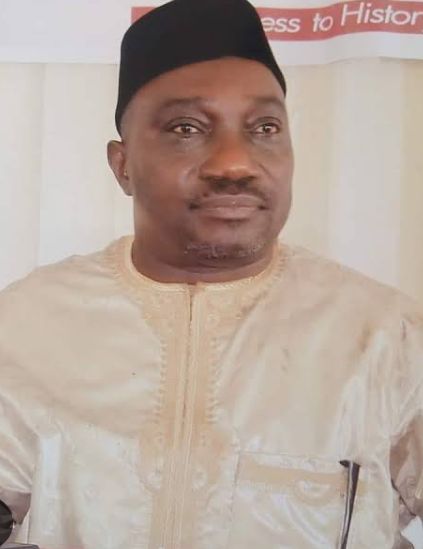
— Prof. Phillip Afaha declares “ceasefire” on campus, pledges academic excellence, innovation and global competitiveness
Thomas Thomas
The pioneer Vice-Chancellor of the Akwa Ibom State University of Education, Afaha Nsit, Professor Phillip Afaha, has unveiled an ambitious vision to transform the newly established institution into a world-class university defined by academic excellence, innovation, discipline, research and global impact.
Professor Afaha made the declaration on Thursday, October 8, 2026, during his first interactive session with the university community, describing the emergence of the institution as a defining moment in the history of education in Akwa Ibom State.
“There are moments when History occurs in the life of a people; this is one of them,” the Vice-Chancellor declared as he welcomed members of the university community to what he described as “your university”—the Akwa Ibom State University of Education, Afaha Nsit.
He recalled that Governor Umo Eno signed the law upgrading the former Akwa Ibom State College of Education to a University of Education on July 28, 2026, describing the development as a fulfilment of a longstanding educational aspiration of the people.
According to him, the establishment of the university has not only advanced scholarship but has also revived the educational dreams of Akwa Ibom’s forebears who, despite colonial restrictions, built schools and sponsored their children abroad for education. He said Governor Eno, through the establishment of the university, had “passed the golden torch to the future.”
The Vice-Chancellor linked the new university to the Governor’s ARISE Agenda and his declaration of a state of emergency in education, saying the two developments signalled the administration’s determination to “recalibrate and reposition” the education sector for optimal service delivery.
Professor Afaha stressed that his appointment as pioneer Vice-Chancellor was not a trophy but a responsibility, pledging to work with the university community to build an institution capable of attaining world-class status.
“Our duty is to cultivate excellence and nurture it to grow for eternity,” he said, identifying teaching, research and community service as the cardinal purposes around which the university would build its foundation.
‘No More Bickering and Factions’
In one of the strongest parts of his address, the Vice-Chancellor called for unity among members of the university community, declaring an immediate end to rancour, bickering and factionalism.
“As your Vice-Chancellor, I declare a ceasefire and an immediate end to bickering and factions on this campus,” Professor Afaha stated, urging staff to remember that students learn not only from what they are taught but also from the conduct and example of those who teach and administer the university.
He called on all members of staff to demonstrate discipline, good conduct, dedication and professionalism, insisting that the institution could only achieve its historic mandate if “all hands must be on deck.”
The Vice-Chancellor further announced that the university would pursue an uncompromising vision of becoming a centre of academic excellence and a hub for pedagogical innovation, with a mandate extending beyond the training of educators to producing researchers, educational leaders and innovations capable of making tangible societal and economic impact.
From College to World-Class University
Professor Afaha said the transition from college to university would require a corresponding transformation in institutional culture, standards and professional conduct.
He disclosed that his administration would deploy mentorship, training, workshops, strategic engagements and university traditions to cultivate an academic culture befitting the new institution. He also assured staff and students that their welfare would receive priority while discipline and fairness would remain central to the administration.
On infrastructure, the Vice-Chancellor promised to pay particular attention to the upgrading of both soft and hard infrastructure to support quality teaching, learning and research. He appealed to entrepreneurs, development partners and corporate organisations to support the university with classrooms, hostels, laboratories, vehicles, equipment, computers and internet connectivity.
Producing Job Creators, Not Mere Job Seekers
Professor Afaha also defended the rationale behind the establishment of a specialised University of Education, arguing that the institution was designed to respond to the changing demands of education and the global knowledge economy.
He cited emerging realities including artificial intelligence, robotics, nanotechnology and genetic editing, arguing that the educational system must be recalibrated to prepare young people for a rapidly changing world.
According to him, the university would go beyond merely professionalising teaching and research to produce “world class educationists and job creators that can find their relevance anywhere on earth.”
The pioneer Vice-Chancellor congratulated the institution’s first set of students, describing their experience as unique because they enrolled in a college and suddenly found themselves as pioneers of a university.
However, he reminded them that the historic opportunity came with responsibility, warning that the university would not tolerate cultism, examination malpractice, sexual harassment or other conduct capable of damaging its reputation.
Afaha Nsit Set to Become a University Town
Professor Afaha also told the people of Afaha Nsit that the establishment of the university had placed their community on the global academic map.
He said scholars and students from different parts of the world would increasingly visit the community in search of knowledge, predicting that the name “Afaha Nsit” would appear in academic research across the world.
Beyond education, he projected that the university would boost tourism and stimulate the local economy and development of Afaha Nsit and its environs.
The Vice-Chancellor described the establishment of the university as one of the most enduring investments any government could make in its people, stressing that physical infrastructure could deteriorate with time, whereas a university possesses a legacy capable of outliving generations.
“A university has a soul; it is a legacy that will outlive all others,” he declared.
He expressed confidence that the Akwa Ibom State University of Education, Afaha Nsit would ultimately emerge as an institution of global competitiveness and impact and as “the most enduring legacy” of the present generation.
Professor Afaha ended by welcoming members of the university community to the institution and appealing for continued support as the university begins its historic journey.