
University of Uyo, Host Communities End 35-Year Rift in Landmark Peace Accord


Thomas Thomas
In a development being hailed as a major turning point in the history of the University of Uyo and its host communities, the institution and community leaders have reached a landmark reconciliation after nearly 35 years of strained relations, opening a new chapter of cooperation focused on security, protection of university property, community partnership, development and academic excellence.
The breakthrough was achieved today at the office of the Vice Chancellor, Professor Christopher Nyong Ekong, during a high-level peace and mediation meeting involving representatives of the University and leaders of the surrounding communities.

The significance of the development lies not only in the peace reached, but in the fact that the reconciliation resolves a longstanding dispute that had persisted through successive administrations. Previous attempts to bring the University and its host communities to a lasting understanding had reportedly failed, leaving behind a protracted relationship characterised at various times by disagreements over access, boundaries, community interests and other related issues.
Against that background, the latest development represents what many had considered difficult, if not almost impossible, to achieve. It also provides the foundation for a new relationship in which dialogue and cooperation are expected to replace confrontation and mistrust.

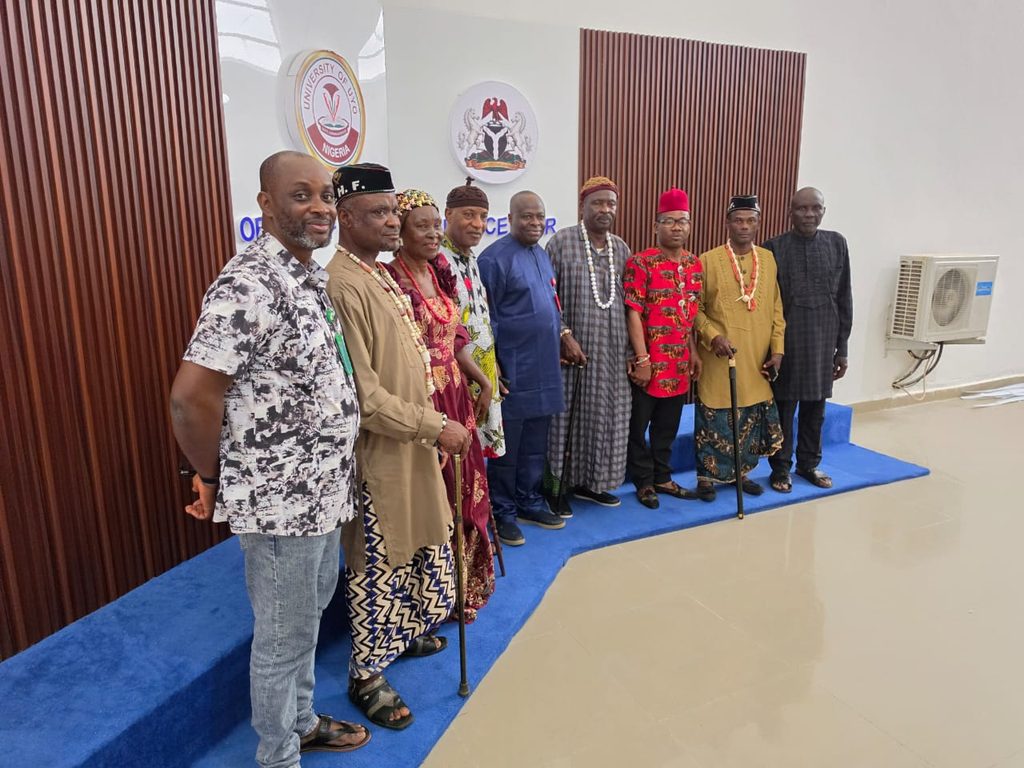

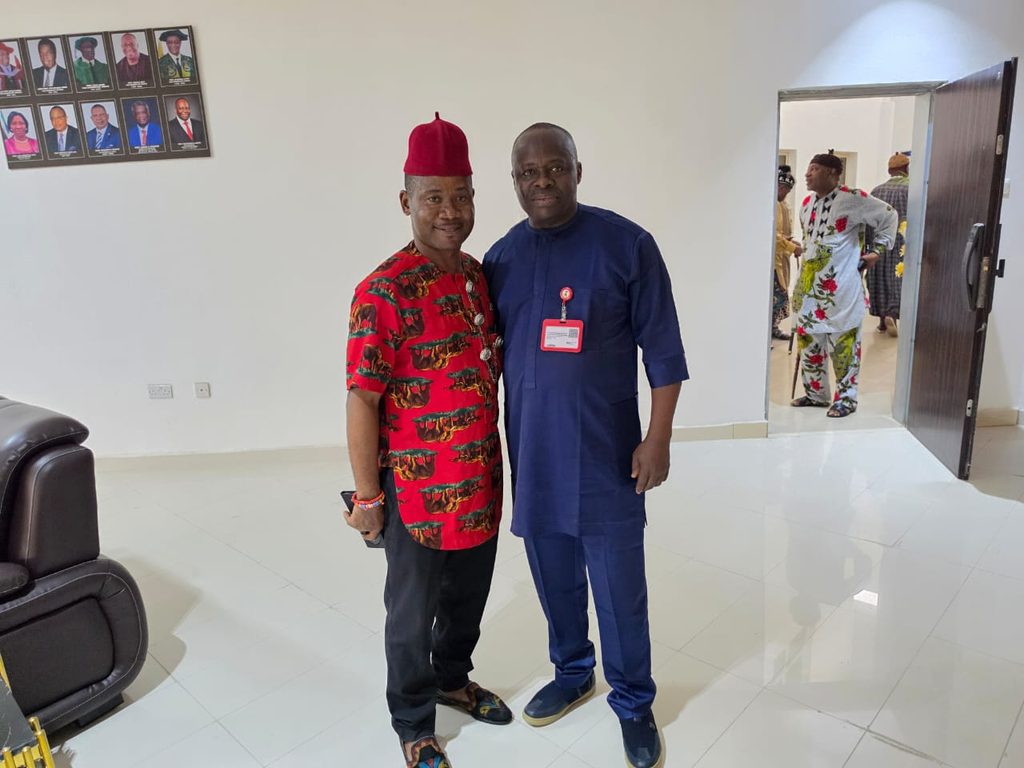
Leading the delegation and serving as mediator, Chief Kenneth Ekponudim Ntong, LL.M, placed two major demands before the University on behalf of the host communities—the provision and improvement of an access road and the resolution of the boundary question between the University and the surrounding communities.
According to Chief Ntong, the two issues had historically been at the heart of the protracted crises that strained relations between the University and its host communities for decades. He therefore urged the University administration to give serious consideration to them as part of the process of consolidating the peace that had now been achieved.

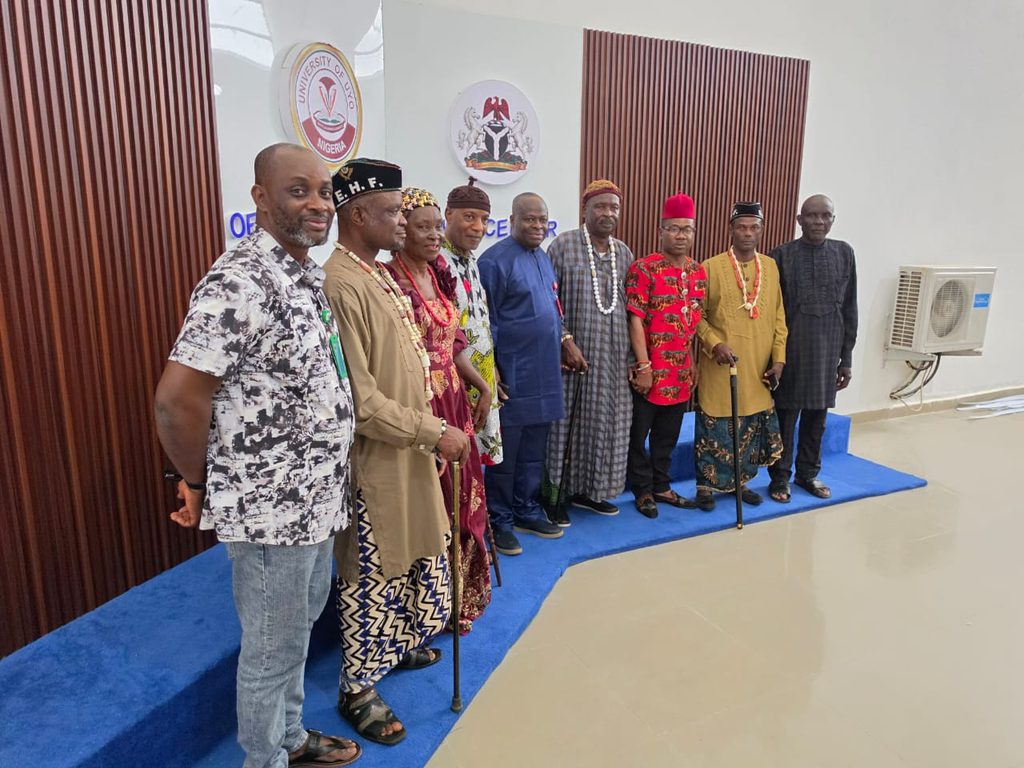

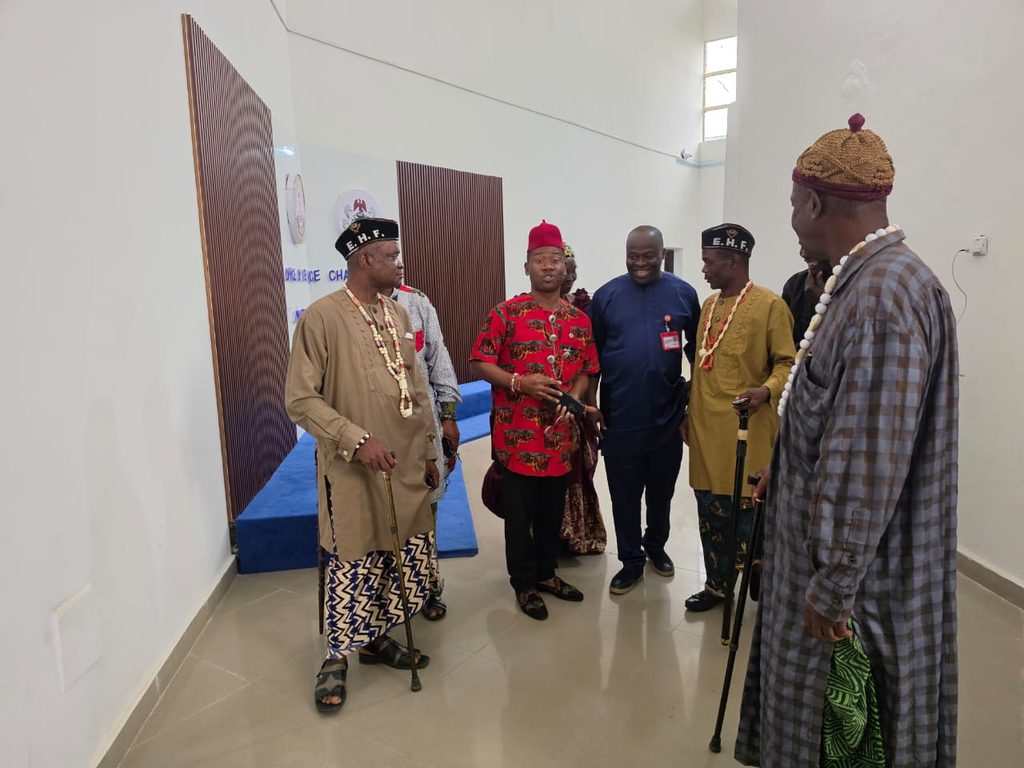
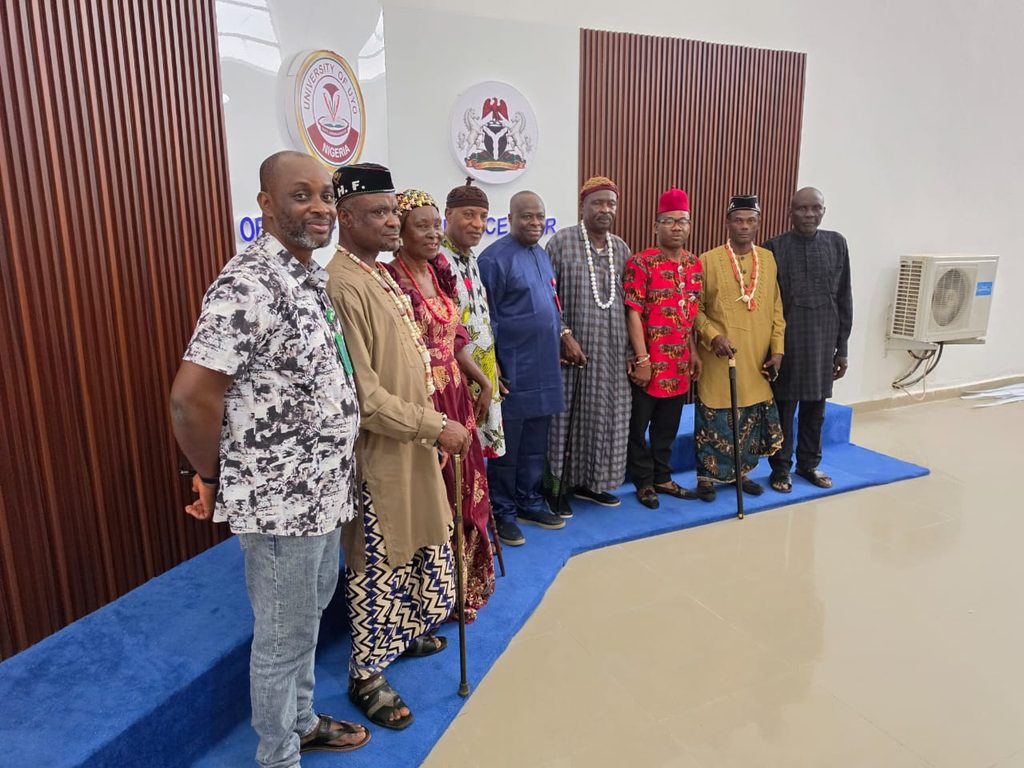
He explained that the purpose of raising the issues was not to reopen old wounds, but to identify and address the underlying matters that had repeatedly generated disagreement between both sides. In his view, lasting peace would be more meaningful if the issues that had contributed to decades of misunderstanding were approached through dialogue and a spirit of mutual accommodation.
Chief Ntong said the meeting had provided all sides with an opportunity to finally move beyond the grievances and disagreements that had defined their relationship for decades. He explained that the objective was not simply to declare an end to the crisis, but to establish a new framework of mutual respect, understanding and cooperation capable of producing lasting peace between the University and its host communities.
He stressed that the communities were prepared to regard the University as a development partner and to work with its authorities in advancing the interests of both sides. He said the passage of almost 35 years without a sustainable resolution made the present breakthrough particularly significant.
The community leader further appealed for a new era of collaboration between the University and its host communities, stressing that both sides stood to benefit from a relationship built around cooperation rather than confrontation. He said the communities were ready to collaborate with the University on initiatives capable of promoting progress, development and a more secure environment around the institution.
According to him, the communities were willing to play a constructive role in the University’s development and security, while expecting the University to also recognise the legitimate developmental concerns of its host communities.
Chief Ntong stressed that the commitment to peace must now be translated into practical cooperation, particularly in the areas of security and the protection of university property. He said the communities would work with the University to discourage criminal activities around the institution and prevent individuals from exploiting the surrounding communities as a platform for crimes within or around the campus.
He also emphasised that the new relationship would help address the sensitive issue of encroachment on university land, noting that community cooperation would be critical to protecting the institution’s territorial integrity while ensuring that legitimate community concerns were addressed through dialogue rather than confrontation.
Chief Ntong maintained that the agreement should not be interpreted as an attempt to suppress legitimate interests of the communities. Rather, he said, it was intended to create a healthier mechanism through which concerns on both sides could be discussed and resolved peacefully.
Responding, the Vice Chancellor of the University of Uyo, Professor Christopher Nyong Ekong, described the reconciliation as a historic moment for the institution and an important development for its future.
Professor Ekong acknowledged that the dispute had endured across several administrations and had at times created an environment that was not conducive to the kind of relationship required between a major university and its host communities.
He said the importance of the meeting extended beyond the personalities present, because its real value would ultimately be measured by the impact it would have on the institution and generations of students, staff and community members who would inherit the new relationship.
The Vice Chancellor said the University was not interested in sustaining confrontation with its neighbours, but in building genuine partnerships based on communication, mutual respect and shared responsibility.
He explained that while the University remained committed to safeguarding its land and institutional assets, it was equally prepared to listen to the legitimate concerns of the host communities and seek constructive ways of addressing them.
Professor Ekong, while responding to the issues raised by the delegation, said he would hold another meeting with the community leaders as part of efforts to further consolidate and strengthen the peace reached at the meeting.
The proposed follow-up engagement, according to the Vice Chancellor, would provide an opportunity for both parties to deepen discussions around the outstanding issues and establish a stronger framework for sustained cooperation between the University and its host communities.
Professor Ekong further stated that the University needed communities that would identify with the institution, protect its interests and contribute to its peace and security. In the same vein, he said, the University had a responsibility to ensure that its presence continued to generate opportunities, development, knowledge and wider benefits for the surrounding communities.
The Vice Chancellor connected the reconciliation to the University’s broader pursuit of institutional development and academic excellence, stressing that a stable and peaceful environment was indispensable to the growth of any university.
He noted that when disputes and insecurity are reduced, the institution is better positioned to concentrate on teaching, research, innovation, infrastructure, partnerships and other initiatives capable of strengthening its national and international standing.
He therefore expressed optimism that the new relationship with the host communities would contribute significantly to the University’s development agenda and its determination to improve academic excellence and institutional visibility.
The University side also included the Chief of Staff to the Vice Chancellor and Professor Aniefiok Ukommi, who participated in the engagement.
On the community side, the delegation included Eteidung Christopher Effiong Ekeso, Village Head of Use Atai, who welcomed the new direction in relations and pledged the community’s cooperation.
Eteidung Ekeso said the community had chosen to embrace peace because continued conflict could serve neither the interests of the people nor those of the University. He recognised the institution as an important neighbour and development partner whose success would also have implications for the surrounding communities.
He assured the University authorities that the community was prepared to work with the Vice Chancellor to preserve the peace achieved, adding that community leaders would not ignore activities capable of threatening the University’s security or property.
The Village Head of Anua Offot, Eteidung Linus Bassey Inyang, was present as a witness to the proceedings.
The Chairman of Use Atai Village, Elder Joseph Effiong Akpan, also pledged the community’s support for the emerging peace arrangement, while Obong Pastor Sylvanus Augustine Akpan, Secretary of Use Atai Village, underscored the need for continuous communication between community leaders and the University authorities.
Other members of the delegation included Obong Paulinus Essien Ekpe, Family Head, Udung Udo Abasi Inyang, and Obonganwan Lucy Etuk Udoh, Obonganwan Use Atai.
The parties agreed that the peace achieved must evolve into a lasting and mutually beneficial relationship, with particular attention to community security, prevention of crime and criminality, protection of university land, peaceful resolution of future disputes and support for development initiatives.
The security component of the understanding is particularly significant. With the communities committing themselves to closer cooperation with the University, community leaders are expected to become important partners in identifying, discouraging and reporting activities capable of threatening the safety of students, staff, visitors and university infrastructure.
The arrangement could therefore signal a fundamental transformation in the relationship between the University of Uyo and its immediate environment—from a relationship periodically burdened by disputes and suspicion to one founded on partnership, shared responsibility and collective development.
For an institution that has carried the unresolved legacy of host-community tensions for approximately three and a half decades, the meeting represents considerably more than a symbolic peace gesture. It points to the emergence of a new social compact in which the University and its surrounding communities recognise the interconnectedness of their futures.
After years in which reconciliation appeared elusive and previous administrations were unable to achieve a lasting settlement, the latest development offers a renewed opportunity to build a relationship strong enough to withstand future disagreements and changes in leadership.
The real test, however, will be whether the commitments reached today can be sustained beyond the meeting room. If faithfully implemented, the new understanding could provide the University of Uyo with a more secure operating environment while giving its host communities a stronger stake in the institution’s development.
After nearly 35 years of strained relations, the University and its host communities have now taken what could become a defining step towards a new era of peace, security, partnership and shared prosperity.