
Outrage Over Atiku’s Plan to Restore Fuel Subsidy
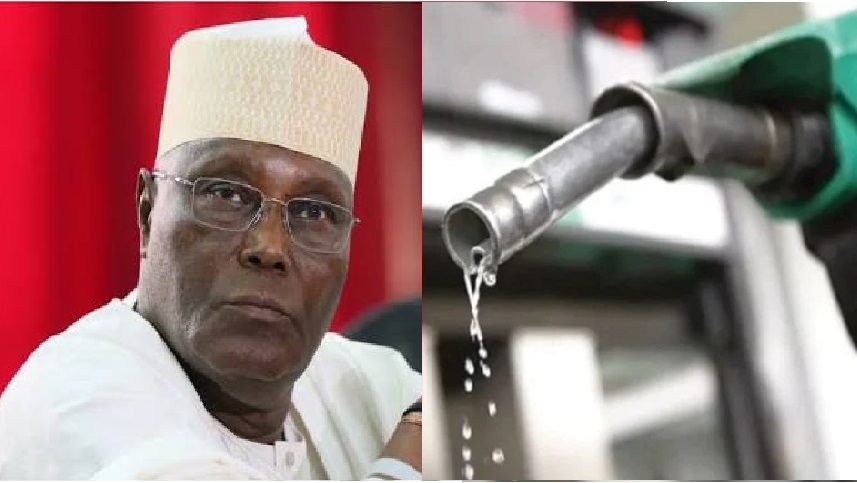
Former Vice President and African Democratic Congress (ADC) presidential candidate, Atiku Abubakar, has come under criticism after declaring that he would restore petrol subsidy if elected President of Nigeria in 2027.
Atiku’s position has triggered a fresh national debate over fuel pricing, the economic reforms introduced by President Bola Tinubu and the best way to protect Nigerians from the rising cost of living.
The former vice president made the declaration during an interview in which he questioned what happened to the funds saved following the removal of the petrol subsidy in 2023. Atiku argued that Nigerians have not sufficiently benefited from the policy change and said his administration would reconsider the subsidy arrangement if elected.
His comments have attracted criticism from the Presidency and the All Progressives Congress (APC), while some Nigerians have expressed support for the proposal because of the economic hardship associated with higher petrol prices.
Presidency Rejects Atiku’s Proposal
The Presidency strongly criticised the proposal, describing the return of petrol subsidy as a step backwards.
Presidential spokesperson Bayo Onanuga argued that the subsidy regime was associated with significant waste and corruption and questioned how a new subsidy system would be financed and administered.
The Presidency also pointed to changes in Nigeria’s petroleum sector since the subsidy was removed, arguing that any proposal to reintroduce the policy must take into account the current structure of the industry.
President Bola Tinubu also criticised Atiku’s position, describing the proposal as evidence of a lack of understanding of governance and economics. The reaction has further intensified the political debate ahead of the 2027 presidential election.
APC Accuses Atiku of Political Desperation
The APC has also rejected Atiku’s proposal.
APC National Publicity Secretary Felix Morka described the pledge as an attempt to appeal to Nigerians affected by the rising cost of living. He argued that returning to the former subsidy system could undermine the economic reforms undertaken by the Tinubu administration.
Another APC chieftain, Faizu Alfindiki, challenged Atiku to explain how his proposed subsidy would be funded if he eventually becomes president.
The criticism centres largely on the financial implications of subsidy payments. Opponents of the proposal argue that the government would need to identify a sustainable source of funding rather than rely on borrowing or diverting money from other public services.
Atiku’s Aide Offers Clarification
However, Atiku’s position has also been clarified by his aide, Phrank Shaibu.
According to Shaibu, Atiku’s proposal is not necessarily a return to the previous system of subsidising imported petrol. Instead, he said the proposal is focused on supporting local petroleum production.
The clarification is significant because Nigeria’s petroleum industry has changed considerably with the expansion of domestic refining capacity. The argument is that government support for locally produced petrol could potentially have a different economic effect from subsidising imported products.
Atiku has also argued that the savings from subsidy removal should have been used to improve the welfare of Nigerians, particularly in areas such as poverty reduction and social services.
Nigerians Divided Over Fuel Subsidy
Public reaction to the proposal has been mixed.
Some Nigerians have welcomed the idea because petrol prices and broader living costs have placed considerable pressure on households and businesses since the subsidy was removed.
Residents interviewed in Jigawa, for example, reportedly expressed support for Atiku’s position, saying subsidy removal had contributed to economic hardship.
However, other Nigerians have questioned whether restoring subsidy is a sustainable solution. Critics argue that previous subsidy arrangements were vulnerable to abuse and that government resources could be better directed towards targeted assistance, public transportation, healthcare, education, infrastructure and job creation.
The disagreement reflects a broader challenge facing Nigeria: how to provide immediate relief to citizens without returning to policies that may place significant pressure on public finances.
Economic Concerns Remain
Nigeria’s fuel subsidy debate is taking place against the background of major economic reforms introduced by the Tinubu administration.
Finance Minister Taiwo Oyedele recently said the reforms, including the removal of fuel subsidy and changes to the foreign-exchange system, helped prevent a potential economic collapse and improve public finances. At the same time, the reforms have contributed to serious short-term cost-of-living pressures for Nigerians.
This has created a difficult policy question for the next presidential election.
Supporters of subsidy restoration argue that government must prioritise affordability and protect households from excessive fuel costs. Opponents argue that a broad petrol subsidy could become expensive and difficult to control, especially if it is not accompanied by strict transparency and accountability measures.
A Major 2027 Election Issue
The controversy is likely to become an important issue in the 2027 presidential campaign.
Atiku’s proposal has placed the cost of petrol and the future of Nigeria’s energy policy directly in the political conversation. The debate is no longer simply about whether subsidy should exist but also about who should benefit, how it would be financed and whether government can prevent leakages.
For many Nigerians, the most important question may ultimately be whether any proposed subsidy arrangement would translate into meaningful reductions in the cost of transportation, food and other essential goods.
As political parties prepare for the 2027 election, voters are likely to demand clearer explanations from all presidential candidates about their plans for fuel pricing, public finances, domestic refining and social protection.
Atiku’s proposal has therefore opened another major chapter in Nigeria’s long-running fuel subsidy debate. Whether Nigerians ultimately support or reject the idea may depend less on political arguments and more on the details of how the proposed policy would work, how much it would cost and how its benefits would reach ordinary citizens.
This report reflects publicly reported statements and reactions. Claims and political positions attributed to individuals or organisations should be understood in that context and are not presented as independently established facts.