
Osun Naira Rain: How APC, Accord Allegedly Spent Over N100bn During Governorship Election
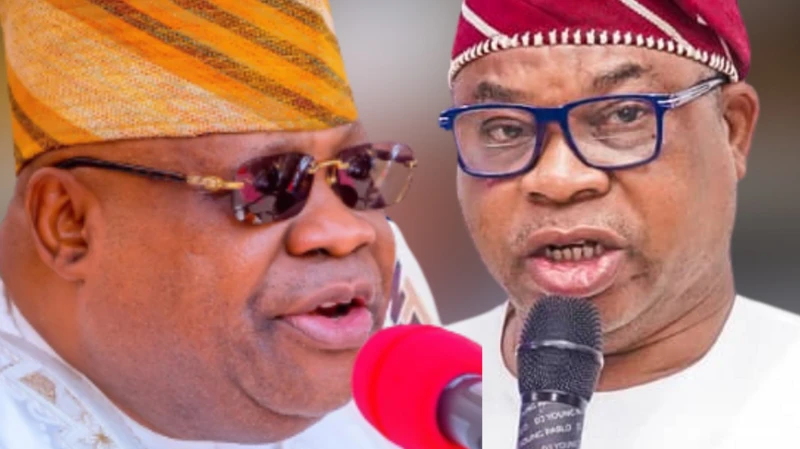
The August 15, 2026, Osun State governorship election has come under renewed scrutiny following reports that the All Progressives Congress (APC) and the Accord Party deployed more than N100 billion in campaign and election-related spending.
An investigation published by Saturday PUNCH reported that the money was allegedly channelled into campaign materials, payments to party agents and canvassers, security-related expenses, electoral personnel and alleged voter inducement across the state’s 3,763 polling units and 332 wards.
The reported figure has generated concerns because it would be significantly higher than the statutory spending limit for governorship candidates under the Electoral Act 2026. The law reportedly places the maximum election expenses for a governorship candidate at N3 billion.
Spending on Party Agents
According to the investigation, APC agents were allegedly paid N100,000 each to supervise voting at polling units, while Accord agents reportedly received N20,000 each.
The Accord Party was also reported to have engaged agents from several other political parties, with each receiving N20,000. When the reported figures are calculated across the 3,763 polling units, the expenditure on agents alone amounted to hundreds of millions of naira.
The report also stated that APC ward collation officers were allegedly paid N120,000 each across the state’s 332 wards, amounting to approximately N39.84 million.
These payments formed only part of the reported election-related expenditure.
Security and Electoral Personnel
Security personnel were another major component of the reported spending.
According to sources cited in the investigation, security teams comprising personnel from the police, Nigeria Security and Civil Defence Corps and Federal Road Safety Corps allegedly received N100,000 per polling unit from APC, while Accord reportedly provided N80,000.
The report further stated that the state government allegedly contributed another N50,000 per polling unit to security personnel.
Based on the figures reported, the combined spending by APC, Accord and the state government on security personnel across the polling units was estimated at about N865.49 million.
The investigation also reported that some senior police officers allegedly received additional payments from APC, although the amount reportedly spent by Accord on senior security officials could not be independently established.
Billions Allegedly Spent on Voter Inducement
One of the most significant areas of reported expenditure was alleged voter inducement.
The investigation cited an APC source who claimed that the party’s initial template involved N40,000 per targeted voter, with payments reportedly structured before and on election day.
A former local government chairman and APC chieftain was quoted as saying that some local governments received tens or even hundreds of millions of naira for the exercise.
Based on the reported template, the investigation estimated APC’s alleged expenditure on voter inducement at approximately N22.578 billion.
There were also allegations that money was distributed to electoral officers at polling units. The report stated that N300,000 allegedly given to electoral officers across 3,763 polling units would amount to about N1.129 billion.
However, the amount allegedly spent by Accord on electoral personnel could not be independently established. A senior aide to Governor Ademola Adeleke reportedly confirmed that Accord reached out to electoral personnel but said he could not confirm the amount involved.
Election Outcome
Despite the extensive financial mobilisation reported around the election, the contest was ultimately decided by votes counted and declared by the Independent National Electoral Commission.
Governor Ademola Adeleke, contesting on the Accord Party platform, won the election with 511,067 votes, defeating APC candidate Bola Oyebamiji, who secured 444,815 votes.
The reported spending has therefore raised broader questions about the growing influence of money in Nigerian elections and whether financial inducements can undermine voters’ ability to make independent choices.
Samson Itodo, Executive Director of Yiaga Africa, reportedly criticised the alleged level of spending and called for appropriate action if the figures were established. He argued that expenditure above the statutory threshold could constitute an electoral offence.
Concerns Over Electoral Integrity
The allegations have also renewed discussions about the need for stronger enforcement of campaign-finance regulations.
While political parties and candidates require funds to organise campaigns, recruit lawful personnel and communicate their policies to voters, excessive spending and alleged payments intended to influence voters can create an uneven electoral environment.
The Osun election has consequently become an important case study in discussions about campaign financing, voter inducement and electoral accountability ahead of Nigeria’s 2027 general elections.
Importantly, the reported figures are allegations based on sources cited by the investigation and should not be treated as a final determination of wrongdoing by any individual or political party. Relevant authorities would need to independently verify the claims and determine whether any electoral laws were breached.
The development comes as the Independent National Electoral Commission continues preparations for the 2027 elections. INEC Chairman Prof. Joash Amupitan recently said the commission plans to conduct a nationwide mock accreditation exercise in November 2026 to test the Bimodal Voter Accreditation System and strengthen preparations for the next general election.
The Osun experience is therefore likely to fuel further calls for transparency in campaign financing, stronger monitoring of election spending and greater protection of voters from financial inducement.
This report is based on publicly reported findings and allegations. Claims concerning alleged payments and expenditure remain subject to verification by the appropriate authorities.